The Anatomy of a Great Speech | A SleepWise Story
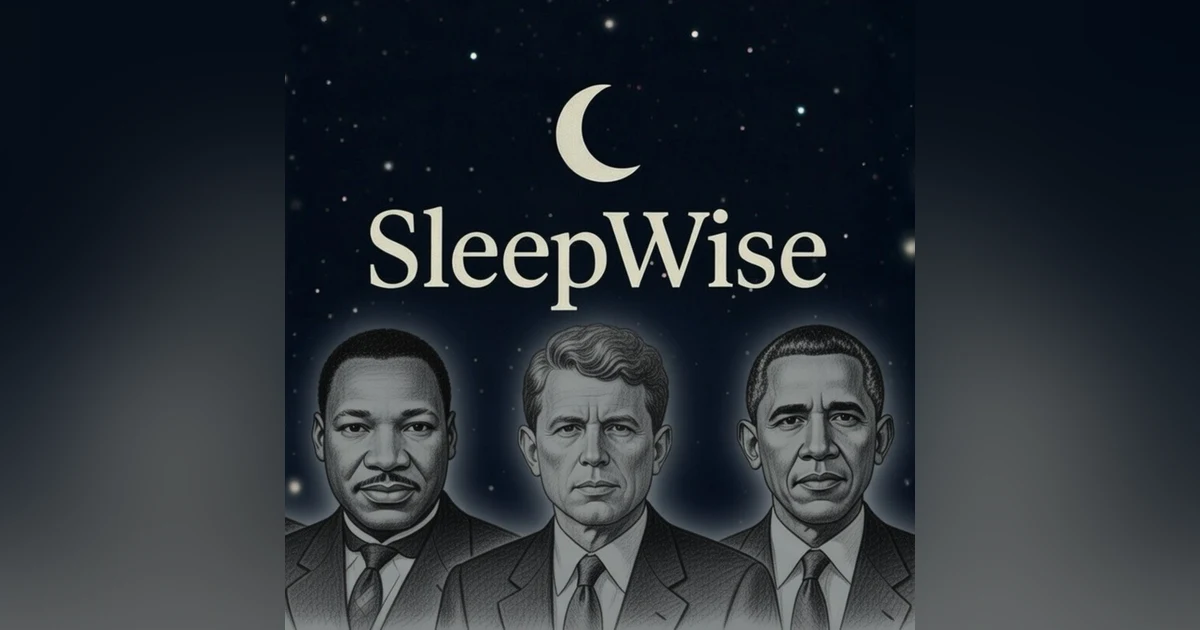


Tonight, settle into a calm bedtime story about the hidden craft behind unforgettable public speaking. In this SleepWise episode, we explore why certain voices can quiet a room and make meaning feel effortless… not through volume, but through rhythm, clarity, and trust.
Gently, we drift through five iconic speakers—Winston Churchill, Martin Luther King Jr., John F. Kennedy, Barack Obama, and Carl Sagan—and listen for the patterns they shared. You’ll hear about the first ingredient: how attention is earned through steadiness and honesty. Then we move into the power of a single image—the kind that lets the mind rest as it understands. We follow the pulse of repetition and cadence, the turning point that makes an idea suddenly feel clear, and the quiet kindness of a well-timed pause.
Along the way, we visit defining moments: wartime broadcasts that steadied a nation, speeches that carried a moral dream, challenges that called a generation forward, modern addresses shaped by empathy, and cosmic reflections that widened the world until it felt peaceful again.
As always, there’s nothing you need to memorize. Let the ideas drift through you like soft music, and let your breathing slow as the night grows quieter.
Press play, get comfortable, and fall asleep to the gentle anatomy of great voices.
Links for Ad-Free Audio:Spotify: https://spotify.link/VjqOKaf0HXbApple Podcast: https://apple.co/3Ndku9D----SleepWise, Sleep Stories, Bedtime Stories, Guided Sleep, Relaxation, Mindful Sleep, Calm Narration, Science for Sleep, ASMR Sleep, Deep Relaxation, Falling Asleep, Sleep Meditation, Guided Meditation, Sleep Podcast, Soothing Voice, Peaceful Storytelling, Night Routine, Sleep Aid, Mindfulness, Restful Night, Relaxing Audio, Gentle Storytelling, Sleep Channel, Meditation for Sleep, SleepWise Podcast, Sleep Narration, Calming Stories, Rest and Relaxation, Sleep Help, Tranquil Nights
0:00 Good evening and welcome back to Sleep Wise. Tonight you don't need to do anything at all. No remembering, no solving, no keeping up. Just let your shoulders fall heavy into the bed, let your jaw loosen, and let the room become simpler with every slow breath. If there is any noise in the day still moving in your mind, imagine it dimming like a hallway light, not switched off, just turned lower until it becomes a soft glow behind a closed door. You can listen to the small sounds that remain, the hush of air from a vent, the distant traffic turned into a gentle ocean, the quiet fabric of the sheets when you shift. Nothing urgent, nothing to chase. Because tonight we're going to listen for something steady, the way a certain kind of voice can change the air in a room. Not a spell of magic.
1:20 A spell of listening. You've felt it before. A crowd grows quiet and a sentence lands, and somehow it feels larger than the words themselves. You can hear the pauses, the measured rhythm, the calm certainty that says without forcing, stay with me. There is science in this, even if it feels like art. Your brain is always scanning for patterns, for safety, for meaning. When a speaker finds a clean rhythm, your attention can settle into it, the way your breathing settles into a slow walk.
2:08 And when a voice sounds grounded, when the pace is unhurried, when the message is clear, the body often follows, softening its grip. Shoulders drop and the forehead smooths. The mind stops darting from thought to thought because the path is being lit ahead. Great speakers don't rely on volume. They rely on shape, on timing, on trust, building a road through sound until an audience is walking with them without noticing the moment it began. Over the next hour, we'll drift through 5 voices from the last century and our own Winston Churchill, Martin Luther King Junior, John F Kennedy, Barack Obama, and Carl Sagan. Each one spoke in a different world to a different fear, to a different hope, and yet each could hold attention like a warm lamp in a dark room.
3:28 We'll visit a wartime radio where a nation listens in its kitchens and shelters. We'll stand on sunlit steps before a reflecting pool where words rise like a hymn, and we'll touch the star filled quiet that makes the whole world seem small, precious. And we'll do it slowly, like opening a small, well worn book. We'll notice how a speech begins, how it earns silence, and the images that make ideas easy to hold. We'll notice repetition, the turning point, the pause, the quiet word we, and the one line that survives long after the room has emptied.
4:20 For now, just settle in, Let the sheets gather around you, let your breathing find its own pace, and let the first ingredient of the spell arrive. A calm, shared hush. And as that hush arrives, you may notice how quickly the mind changes when sound becomes steady. A moment ago, thoughts might have been scattered like small birds lifting from a wire, each one tugging your attention in a different direction. But when a voice is calm and the pace is gentle, the mind begins to gather itself again, returning to one place. This first ingredient is attention, and it begins even before meaning.
5:20 Your ears are always listening for patterns, for rhythm, for predictability, for the soft sign that the world is safe enough to relax deep inside the brain. Networks that help you focus also help you choose what to ignore. The same systems that notice a sudden noise in the dark can also settle when the world becomes consistent, when nothing sharp is coming next. A steady cadence is like a handrail. It gives your mind something to hold so it doesn't have to grip everything else. And This is why great speakers often begin slowly. They don't rush toward the point because the point will land better after the room has been gently gathered. After 1000, separate thoughts have been invited into one shared direction.
6:30 You can hear it in the way a crowd quiets, almost involuntarily, when someone speaks with calm authority. Not loud authority, not force, but the kind that feels rooted, as if the person speaking has been standing in that place for a long time. Often they begin with what is true, even if it is hard not to alarm you, but to remove uncertainty, because uncertainty is what keeps the mind awake. It is the unfinished sentence, the unanswered question, the sense that something might happen without warning.
7:15 When a speaker names the stakes plainly, the listener no longer has to imagine them in the dark. And once the imagination is relieved, attention can soften. Tonight, we'll listen for that moment. The instant when the room decides to trust the next sentence. We'll follow it like a slow thread through time, into kitchens lit by weak bulbs, into crowded streets, into bright halls, into a quiet studio where the stars seem close.
7:56 For now, just let attention become simple. Let the voice be a single path, and let the rest of the day fade to the sides, like scenery passing in the dark. You may even feel it in your breathing. When the timing of words is predictable, the body often begins to synchronize in small ways, inhaling on one phrase, exhaling on the next. Heartbeat and muscle tone respond to the same quiet message. Nothing is chasing you. Nothing is about to change suddenly, so we start here with the simplest kind of guidance.
8:47 A voice that does not demand, but invites until listening feels like resting. Now imagine the world turning back to a year when the nights felt heavier than usual. Outside, the sky is dark not only because it is late, but because curtains are drawn tight against distant fires. Somewhere, a siren has already sounded once, and people have learned to keep their shoes close, just in case. In small rooms across Britain, families gather around a radio, not for entertainment but for orientation, a way to know where the world stands and whether to Morrow will still look like to Morrow. The dial glows softly, and then a voice arrives, rough edged and unmistakable.
9:53 Winston Churchill does not begin by pretending things are easy. He offers no quick comfort, no bright distractions. He begins with truth spoken plainly, and that alone changes the air. I have nothing to offer but effort, he says in one of his earliest war time addresses. Not ease, not escape, only the hard materials of endurance. In moments like this, attention comes from honesty. The mind can relax when it stops guessing.
10:36 Churchill's sentences are built like steps you can stand on. They are balanced, carefully shaped and often repeated, not because he lacks imagination, but because repetition steadies the listener. Like a drum beat heard through the walls. We shall, we shall, we shall. Each return of the phrase is another nail driven into doubt. He practiced this. He wrote his speeches with space for breathing, with lines set out to remind him where to slow, where to pause, where to let a word fall like a weight into silence. And over the radio, those pauses mattered. A pause on the air is not empty.
11:34 It is a shared room, a collective inhale, a moment when thousands of people unknown to one another, are held in the same quiet at the same time. Churchill's voice was not smooth, but it was steady. It carried fatigue and stubbornness and a kind of controlled fire, the sound of someone who would not be pushed from the ground he stood on. And even if you had never met him, you could feel the shape of his promise. Not a promise that the night would pass quickly, but a promise that you would not face it alone. When he lists places, beaches and fields and streets, the mind begins to picture them one after another, as if mapping a whole country with words.
12:36 The repetition does something simple and powerful. It makes the future feel organized, as if fear can be divided into manageable parts. And underneath the defiance there is another technique, quieter but just as important. He uses we far more than I, not because he disappears, but because he distributes the burden. The listener hears themselves inside the sentence, and the sentence becomes a shelter. The room widens now, as if a window is opened somewhere in the dark.
13:23 You don't have to move, but you can feel the change in scale, the way the mind can loosen when it stops staring at what is close and begins to notice what is far. This is where Carl Sagan lived, in that gentle distance. He spoke as though he were guiding you across a quiet observatory floor, one hand lightly on your shoulder, inviting you to look up without strain. And he understood something important about images. When an idea is too large, the mind contends, trying to hold it all at once. But if you offer a single picture, the mind relaxes into it, the way your eyes relax when they find one soft point to focus on.
14:20 Sagan would do that again and again. He would take a concept that could feel abstract, like the age of the universe or the chemistry of stars, and he would turn it into something you could almost touch. Star stuff, he would say, and suddenly the distance between your body and the sky felt smaller, as if the knight had reached down and tapped your shoulder. He spoke in metaphors that weren't meant to confuse. They were meant to soothe. A metaphor is a bridge.
15:02 It lets you cross from the unfamiliar into the familiar without noticing the moment your feet left one shore and found the next. And when he spoke of earth from far away, he did it not to make you feel insignificant, but to make you feel tender. A small world suspended in darkness, carrying every love and argument, every song and goodbye, every whispered promise, every unshared thought. The mind can hold that image more easily than it can hold 1000 arguments about history, and he paired the image with a voice that felt patient. He spoke slowly, letting syllables stretch just enough to be clear, sometimes lingering on a word as if he wanted you to taste it.
16:07 You could hear in that pacing the assumption that you had time, that you could learn without rushing. If you imagine him, you might see him in a quiet studio, the lights dimmed, his gestures open and unhurried. He did not fight for attention. He earned it by being calm. He let sentences breathe, and between them he left little pockets of silence, the way night leaves space between stars. In those pauses, your own thoughts could settle, and that is part of his spell.
16:54 He didn't only inform you, he gave you a place to stand inside the information, a calm vantage point and a picture to hold so gently that it could drift with you towards sleep. The image comes first, and then the meaning arrives behind it, like a tide returning to shore, just enough to feel the world grow quieter. And after a voice like that, the mind begins to understand what attention really is. Not a tight grip, more like a gentle alignment, many small inner movements coming into the same direction, as if a compass has finally found N. But attention alone is only the doorway. Once the room is quiet, a great speaker offers something else, something the mind can carry without strain. An image.
18:00 The brain loves images because they are Restful. An image is a single object that can hold many meanings at once, so you don't have to juggle a dozen abstract ideas in the air. You can simply look inwardly and understand. That is why in the most memorable speeches, the logic is often braided into pictures. A torch past from one generation to the next. A dream unfolding like a landscape. A wall dividing a city, casting its shadow across ordinary lives.
18:48 A pale blue dot hanging in the distance. Images do more than decorate. They organize feeling. They let fear attach itself to something specific and let hope take a visible form. And when hope becomes visible, it becomes easier to share. If you listen closely to the great voices of the last century, you can hear how they use images, the way a night sky uses stars not to overwhelm you with brightness, but to give you points to navigate by.
19:33 Sometimes the image is close, like a kitchen table, a pair of worn hands, a street corner under a street light. Sometimes it is enormous, like a nation or a planet, or the cold quiet between worlds. Either way, the effect is similar. The mind stops spinning because it has something to hold. So as we drift onward, let the radio's warmth fade into a softer dark. Imagine the room widening, the ceiling lifting, the walls dissolving into open air. The next voice we meet.
20:22 Will not speak of streets and beaches, but of horizons and distance and the strange comfort that arrives when you realize how small and how precious everything truly is. Memory, too, prefers pictures. When language is paired with a vivid scene, the brain can store it in more than one way, as sound, as meaning, as a kind of inner photograph. Later, the scene returns 1st, and the message comes with it almost effortlessly. This is one reason certain lines survive for decades. They are not only heard, they are seen. Churchill gave people coasts and hillsides. King gave people mountain tops and rivers of justice. Kennedy gave people a moon hanging like a destination. Obama gave people a long arc, bending towards something better.
21:31 And Carl Sagan, with his patient wonder, gave people the earth itself, seen from far away, floating in the dark like a small lamp. In a moment, we'll step into that widened view, but you can stay comfortable here, exactly where you are, as the second ingredient of the spell settles in the quiet power of a single image. If you stay with that radio a little longer, you can hear how he keeps the room together, not by speaking faster, but by giving each phrase a clear edge, like a stone you can hold in your palm. He understood the weight of small lists, blood, toil, tears and sweat. 4 plain words, each one heavy, each one easy to remember.
22:35 A listener does not have to concentrate to keep them, they settle into memory on their own. And then there are the sentences he builds like arches. Never in the field of human conflict, he says, was so much owed by so many to so few. It is praise, but it is also direction. In a time when fear can make people feel isolated, he reminds them to look up, to see the pilots above, and to feel gratitude instead of helplessness.
23:16 Gratitude changes the nervous system. It turns a clenched kind of attention into a softer 1. Churchill's words often did that. They took the raw energy of anxiety and reshaped it into something sturdier. Duty, resolve, a kind of calm defiance that could last through long weeks. Even his imagery was practical. He spoke of beaches, landing ground, streets, hills, places you could touch, places you might have walked as a child. In that way, the war was not only maps and headlines, it was the familiar ground beneath your own feet. And when he reached for grandeur, it was not for decoration.
24:15 It was to lift people above the immediate terror, to place their suffering inside a story that would one day be told as endurance, as a finest hour. This is part of the spell of attention. A great speaker doesn't erase danger. He names it, then gives it a shape, then gives you a way to stand inside it without breaking. You can imagine, as the broadcast ends, the small click of the radio turning quiet again. Yet the room is different now, not because the world has changed, but because the mind has been gathered into a steadier place, held for a moment by rhythm, honesty and the slow strength of a shared we. He rehearsed until the words felt inevitable. If you picture him at a desk late at night, you can almost see the manuscript marked with underlines, the breathing spaces, the places where his voice should drop, then rise. He treated a pause like punctuation you could hear, and he trusted silence to carry meaning. There was craft in the way he spoke, and there was also will. He had trained his mouth to
25:49 shape difficult consonants, to slow down where urgency might tempt speed, so that the message stayed clear even through crackling airwaves. In that restraint, listeners heard control, and control is calming. When he finally appeared in public, lifting 2 fingers in a simple V, it was not theatrical. It was a small symbol, easy to copy, a gesture that let ordinary people feel part of the same steady posture. The image he offered was not only beautiful, it was practical.
26:36 A mind that is afraid tends to zoom in, narrowing the world until it feels like there is no room to breathe. So Sagan did the opposite. He taught people to zoom out, to widen the frame until worry became a smaller object in a much larger sky. There is a reason this feels calming. The brain carries many maps at once. Some are close, concerned with immediate threats and quick decisions. Others are wide, concerned with context, meaning and long time.
27:21 When you shift to the wide map, the body often softens its alarm. Breathing slows, shoulders release, and thoughts stop snapping at each other because the horizon has returned. Sagan's voice helped that shift happen. He spoke with wonder, but also with clarity, and clarity is a kind of comfort When words are simple and well paced, the listener doesn't have to fight to understand. Nothing sharp, nothing tangled.
28:03 He would guide you through the solar system like a slow walk through a garden, naming what he saw with calm precision. Then, just when the facts had settled, he would place one luminous image into the center. A pale dot, a thin blue line of atmosphere, the quiet fact that oceans and deserts and cities all fit into something so small. He wrote about it after a spacecraft turned back for a moment and photographed Earth from the outer darkness. It was only a speck in the frame, almost easy to miss, and yet it contained everything we have ever known. When people hear that, they often feel two things at once. A kind of humility, yes, but also a kind of relief. If we are all on the same small world, then the sharp edges between us begin to soften just a little in the mind. It is not hard to see why that picture lasted. It is easy for the mind to replay, especially at night when the room is dark and the imagination is awake. And it comes with a feeling too,
29:34 a gentle humility, a softened pride, and a shared belonging, as if the word we suddenly meant every human being who has ever looked up. When an image is carried by a steady voice, it becomes almost like a lullaby. The listener doesn't have to remember every detail, they only have to hold the picture and let its meaning unfold slowly, like a flower opening in the dark. So if your mind has been tight today, you can borrow Sagan's widened view just for a moment.
30:21 Let the room expand, let your thoughts spread out into the calm distance, and notice how the body follows the picture, relaxing into the space it creates. Sometimes the gentlest comfort is not a solution, but a wider sky. If you've ever watched an episode of Cosmos, you may remember the feeling more than the facts. A quiet host. A familiar voice moving through star fields and ancient stories as if the universe were not an exam but a home.
31:05 That was another part of Sagan's gift. He treated knowledge like a companion, not a contest. Even when the topic was immense, he kept his tone intimate, as though speaking to one person who had stayed up late, curious and tired, and simply wanted to understand. He used history as imagery, too. He would speak of early astronomers, of libraries, of ships and instruments, and the mind would see these scenes like slow paintings.
31:45 Facts arrived inside stories, and stories arrived inside pictures, and all the while he kept the pace unhurried, the language plain, the rhythm, the steady. This is a quiet rule of the spell. If the listener has to strain, they wake up. If the listener can rest inside the explanation, they drift. Sagan's calm delivery did something else as well. It gave permission not to know everything immediately. He would circle a concept, gently approaching it from another angle, offering it twice, sometimes three times, until it felt familiar, like learning the shape of a key by touch. In that sense, his style was almost parental, patient, non judgmental, quietly delighted that you were listening at all. And when delight is present, the mind unclenches. Curiosity becomes soft like a blanket rather than sharp, like a question you must answer.
33:06 So the image does its work, and then it makes room for the next ingredient. Because once a mind is calm and once it has something to see, it begins to listen not only for meaning but for pattern, for rhythm. You can feel that even now in your own breathing. Inhale and there is a rise. Exhale, and there is a fall. The body is always moving in cycles, always counting without numbers. And when language arrives in a steady pattern, the body recognizes it as familiar.
33:53 It sinks quietly, like footsteps matching on a sidewalk. That is why the most memorable speeches so often have a pulse, a repeated phrase, a line that returns and returns again, not to fill time, but to make time feel smoother, easier to travel through Indiana a moment. We'll drift from the wide sky back toward the human crowd, where rhythm becomes something shared. But for now, let Sagan's final image linger, like a star seen through a thin curtain, a small world floating, a calm voice fading and the mind ready to follow the next gentle beat on screen.
34:51 He would travel in a kind of imagined ship, drifting past rings of planets and the bright dust of galaxies. But his real vehicle was always the same. A human voice speaking slowly, making the vast feel close enough to understand. Rhythm is one of the oldest ways humans calm each other. A rocking chair, a train on tracks, waves brushing the shore, the steady steps of someone walking beside you in the dark. The nervous system listens for that steadiness, and when it finds it, it begins to trust. Speech can carry rhythm the same way music does, not with melodies, but with repetition, with parallel phrases, with the reliable return of a line that the listener can almost predict. Prediction is soothing when the brain can guess what comes next. It spends less energy scanning for surprises, and that frees the mind to sink rather than brace. Great speakers understand this instinctively. They build phrases like footsteps so an audience can walk with them.
36:22 They use the rule of three, letting ideas arrive in sets that feel complete. They repeat a few keywords and the words become a railing guiding the listener along. Even the pauses become rhythmic. A sentence lands, a breath, a beat of silence, and then the next sentence. It's not only style, it's Physiology. Your brain has circuits that link sound to movement, that help you entrain to a beat. That's why a crowd can clap together, why a chant can spread, why a lullaby can quiet a child. When a speaker finds the right cadence, the audience begins to move with it internally.
37:15 Breathing slows, Hearts settle, Attention becomes steady. Some of this happens through the simple mechanics of hearing. Sound arrives in waves, and your brain times those waves with tiny internal clocks. A steady cadence makes those clocks feel orderly, and order in the mind often feels like safety. There is another quiet benefit, too. Rhythm reduces the load on working memory because it turns many sentences into one shape.
37:55 Instead of holding every detail separately, you hold the pattern, and the pattern carries the meaning along. This is the part of the spell that feels like a tide. It lifts, it falls, it lifts again, and the listener stops resisting, because resistance would mean fighting the current. And in the best speeches, rhythm does something even gentler. It turns many separate people into one listening body. Soon we'll meet the voice that may have understood this better than anyone. A preacher's rhythm shaped by churches and choirs, A cadence that invited thousands of people to answer back, as if the speech were not a performance but a shared act of breathing. And as we approach it, you can imagine the sound of a crowd in the distance.
39:00 Not loud, not sharp, just a low human murmur waiting for a single phrase to return, and return again, until everyone is held inside. The same steady pulse in January of 1961. The air in Washington feels sharp and bright. A new president steps forward, young by the standards of the time, his posture straight, his expression calm, his words prepared with the care of someone who believes sentences can carry a nation.
39:42 John F Kennedy speaks with clipped clarity. He does not wander. He builds, and then, at the exact moment the room is ready, he turns. Ask not what your country can do for you, he says, and the sentence folds back on itself, reversing direction, returning with a mirror image that lands like a bell. Ask what you can do for your country. It is a perfect pivot, not because it is clever. But because it feels clean, the mind can hold it in one breath.
40:27 You don't have to argue with it, you simply understand. This is the quiet power of balance. 1/2 of the sentence sets a familiar expectation, and the other half flips it, leaving you with a sense of moral symmetry, as if the world has been straightened. Kennedy's turns often worked like that. He used contrast to sharpen a line, then stepped across it with you, letting you feel for a moment as if confusion had been simplified. Let both sides, he would say in another address, and the phrase would return again and again, inviting rivals to see themselves in the same mirror, not because conflict disappears, but because the frame becomes wider.
41:27 Even his pacing served the turn. He would slow just before the pivot, letting the first half of the thought settle, and then deliver the reversal with crisp emphasis. A clean release on television, this mattered. The camera loved clarity. Short lines, balanced clauses, Words you could repeat at the dinner table. Words that sounded almost like proverbs. Kennedy's speeches became phrases people carried in their pockets. And because they were easy to carry, they traveled far. You can imagine the way a family might have heard that sentence and repeated it later, softly.
42:20 Not as politics, but as a kind of posture, straight backed, forward-looking. A sentence that asks you to lift your gaze. Even his physical stillness helped. A controlled gesture, a steady gaze, a calm voice that did not plead for approval. The effect was quiet confidence. And quiet confidence is persuasive, especially in uncertain times. Tonight, you don't need to lift anything. Just notice how a well made turn can make meaning feel lighter, as if a problem has been rotated until its handle appears.
43:09 A sentence, properly balanced, can rearrange attention with the gentlest force. And in that gentle rearranging, the mind begins to rest. It is a warm day in late August, and the air is full of footsteps. People gather in Washington, drawn by a shared longing, carrying signs, water bottles, folded hats, and the quiet tension of history. In front of them, stone steps rise toward a familiar figure carved into marble, and beyond that, a pool holds the sky like a mirror.
43:54 When Martin Luther King Junior begins to speak, his voice is steady, almost measured. He is careful at first, laying down meaning like a path of smooth stones. He speaks of promises and delay, of what has been owed for a long time, and you can feel the crowd listening with their whole bodies. Then the rhythm begins to deepen, a phrase repeats, and the repetition is not decoration, it is a signal. It tells the audience, stay with me, we are moving together now. In the black church tradition, a sermon is a shared motion. The speaker calls, the people answer, and the room becomes a single instrument.
44:53 Even outside, even under open sky, that tradition holds. King's pacing changes like music. He slows to let a truth settle, then rises, gathering energy, and the words begin to carry a pulse that people can almost anticipate. And he uses silence, too. He lets a line hang for a moment, and you can hear the crowd fill the space with murmurs of agreement, as if the speech is being breathed in and breathed out together.
45:33 Many who were there remember the moment when he left the tight structure of prepared lines and began to speak more freely. The cadence lifted and the crowd's responses grew louder, as if the speech had become something everyone was helping to build. And when he turned toward his dream, the refrain returned again and again, each time widening the future a little more. In those repeated lines, listeners could place their own hopes. A child, a table, a mountain, a ring of freedom. The images and the rhythm worked together. The phrase returned, and with it the breathing of the crowd returned to the same shared pace. This is why the moment became larger than the speech, because the audience wasn't only hearing words. They were participating in a cadence joined by pattern, held by repetition, lifted by a rhythm that made hope feel possible.
46:46 And if you listen closely, even now, you can sense how that kind of rhythm can quiet the mind. Not by making it smaller, but by giving it something steady to rest upon. Near the end, the rhythm becomes almost hymn like. The repeated lines open outward, as if the whole country's being asked to breathe together, to imagine freedom not as a distant idea, but as something you can hear ringing across hills and streets. For a moment, the crowd is not a crowd. It is a single, steady pulse.
47:30 As King's final lines fade, you can almost feel what Rhythm has done. It has gathered scattered attention into a single current and carried it forward without strain, like a slow river. You don't have to steer, but great speeches rarely stay in one current for long. They build and then they turn. A turn is the moment a listener feels the world rearrange itself in the mind, not because new facts appear, but because old facts are placed in a new shape.
48:12 It can be as simple as contrast. Not this but that, Not fear, but courage. Not what you can receive, but what you can give. The brain loves contrast because it clarifies edges. When 2 ideas are placed side by side, your attention stops wandering because the choice becomes visible, like a fork in a quiet path. And there is a gentle kind of relief in that much of what keeps us awake is not the problem itself, but the fog around it, the sense of not knowing where to place our weight. A well made turn lifts the fog, it gives the mind a handle. The turn is also where tension releases. A speaker will let you feel the weight of a problem just long enough for it to become real, and then offer a line that lifts it like a hand under a heavy box. In storytelling, it's the pivot.
49:27 In music, it's the chord that changes the room. In speech, it's often one clean sentence that flips the direction of the listener's attention, so the same world suddenly feels organized, and the most memorable turns are built with balance. A phrase moves one way, then returns the other way, like a swing that comes back through center. This symmetry is not only beautiful, it is easy to remember because it feels complete. And a complete shape is restful.
50:13 Even half asleep, you can feel when a sentence lands with that kind of closure. Some speakers built their reputations on turning lines, lines that sound simple and yet shift posture in the body. Shoulders rise with worry, then lower. The jaw clenches. Breathing becomes more even because the mind stops bracing for what comes next. Tonight, we'll drift toward one of the clearest voices of that style, a voice from an era when television was young and the future felt newly invented.
50:54 Imagine a small living room, a lamp turned low, the faint glow of a screen in the corner, the sense of a country listening as one. Before we meet him, take a slow breath in, and as you breathe out, imagine the speech you're hearing, turning a corner gently, without hurry, from the shared rhythm of a crowd into the clean geometry of a sentence. The spell is changing shape now, from pulse to pivot. Kennedy used these turns not only for civic duty but for daring.
51:38 When he spoke about the moon, he did not begin with rockets or math. He began with choice. We choose to go to the moon, he said. And the line carried the pivot inside it because it turned uncertainty into decision. Not because it is easy, but because it is hard. Again, the contrast. Again the reversal that makes difficulty feel meaningful. The mind hears that structure and relaxes because it knows where it stands. Hardness is no longer a threat.
52:24 It becomes a reason. He framed the task like a compass point, a far bright destination, clear enough that many separate efforts could align, engineers and pilots and technicians all moving toward the same horizon. A goal can be an image, too, not only something you see but something you move toward in another moment. Standing in Berlin, he used the turn differently. He took a city divided by a wall and made it a symbol that anyone could hold. He spoke of freedom as something you could locate not in slogans, but in streets, in ordinary lives, in a place that refused to be erased.
53:19 He repeated a challenge, letting it return like a drum beat. Let them come to Berlin. With each repetition, the line grew firmer. Not harsher, but clearer, as if he were drawing the outline of an idea and darkening it, stroke by stroke, until the crowd could see it in full. And then came the defining pivot of identity. When he declared himself a Berliner, he wasn't describing his passport. He was turning empathy into solidarity, turning distance into closeness.
54:00 So listeners felt in their own bodies what it means to stand with someone. That is another quiet power of the turn. It doesn't only flip ideas, it flips who the listener feels they are. In a single sentence. You can be moved from spectator to participant, from anxious observer to someone standing inside a shared promise. Kennedy's style was spare, almost architectural. He used few words to build strong shapes, and those shapes held steady under pressure.
54:45 Even in crisis, his tone remained controlled and control his persuasive. A steady voice signals steadiness in the world. A clean pivot signals that confusion can be mastered. For a nation living under the shadow of nuclear fear, that mattered. And for a person lying in bed tired from a long day, it matters too, in a smaller way. When language is structured, the mind stops scrambling. It rests against the structure like leaning on a railing. So the spell continues.
55:31 Rhythm gathered us, the turn clarified us. And now we drift toward the next ingredient, the one you can feel most directly in your body. The voice itself. Not just what is said, but how it is carried through breath, through timing, through the soft power of the pause. A voice is not only sound, it is pace and pause and the quiet decisions a speaker makes about where to place weight.
56:11 You can read the same sentence in your head and feel almost nothing, but here it's spoken with the right timing and it lands differently, as if meaning has found a deeper place to settle. This is because your body listens as much as your mind. Your nervous system notices speed. It notices whether a voice rushes or whether it moves with steadiness, like a slow train on night time tracks. And it notices pauses. A pause is a signal that nothing is chasing the speaker, that there is time, that the next words will arrive without surprise. When you hear steady pacing, the brain makes fewer urgent predictions.
57:08 It stops scanning the edges of the moment and returns to the center. Breathing follows. Muscles release a little. Even the eyes, if they are open, soften their focus. In public speaking, the pause is often where persuasion happens. It gives the listener space to agree. It gives the crowd space to breathe. It turns a room full of separate minds into a single shared rhythm again, but this time a rhythm of silence. And silence has its own comfort.
57:54 It tells the listener you are safe to take a breath, safe to arrive fully in this moment. Some speakers use volume to command a room. Others use restraint. They let emphasis come from timing rather than force, and in that restraint, audiences often feel a curious trust, because restraint feels like control and control feels like safety. A speaker with good timing can move between intimacy and authority without changing the message, only the pace.
58:37 They can speak softly enough that you lean in and then pause long enough that the room leans with you. This is why practiced speakers mark their drafts not only with words but with breaths. A line break, a space, an underline, a quiet reminder to slow down. Silence becomes punctuation you can hear. In our own time, with screens everywhere and attention constantly tugged, people often respond strongly to a calm voice that knows how to wait. In the modern era, few public speakers have been studied for this as much as Barack Obama.
59:29 His speeches often feel like a slow walk up a gentle hill. Not rushed, not theatrical, but carefully paced, each phrase placed as if it has been weighed in the hand before being released. In a moment, we'll listen for his timing, his pauses, his steady warmth. For now, simply notice the space between words. Notice how silence can be part of the sentence. And how that space can feel like permission to rest.
1:00:11 Obama's voice arrives with an ease that feels almost conversational, even in a large hall. He speaks in full sentences, but he lets them breathe. A phrase lands, and he pauses, not as a trick but as a kindness, as if he is making room for you to catch up, to feel included in the thought. He often begins with story, a person's name, a small scene, a detail. You can picture a kitchen table, a worker finishing a late shift, a parent trying to hold things together.
1:00:56 Then he widens the frame, connecting the small scene to a larger idea, and he does it with the simplest bridge in the language we there is not a divided country of separate colors, he suggests in one of his early national moments. There is a single country full of different lives learning to listen to one another. The words are simple, but the effect is large because the listener hears an invitation rather than a verdict. He uses contrast softly, too.
1:01:39 He will name what hurts, what fails, what divides, and then pivot toward what might be repaired, what might be shared. And he does it without raising his voice. When he speaks to a nation in grief, you can hear the control in his pacing. He slows down. He chooses quieter words. He lets silence hold the emotion so he does not have to force it. In moments of mourning, that restraint can feel like steadiness offered to the listener, like a hand on the back guiding you through a doorway. Sometimes, in a Chapel or a church, he would let the room become quiet enough for a hymn to arrive, and the sound of collective singing would carry what ordinary sentences cannot. And then, when he wants to lift a room, he uses rhythm without shouting.
1:02:48 A repeated line, a returning phrase, a careful rise in intensity, like a wave that gathers, then breaks gently, then recedes. Yes, we can. A simple refrain, easy to remember, easy to repeat. As if he has handed the audience something they can hold together. His body language matches the voice. Gestures are measured, palms open, movements controlled, as if he is building trust not only with words but with the calm of his posture. The spell here is not fireworks, it is steadiness.
1:03:32 It is the sense that the speaker is not hurrying past you, but walking beside you, looking forward and inviting you to take the next step. And as you listen, you may notice your own breathing begin to match that steadiness, slowing without effort because the voice has made time feel spacious. In that spaciousness, the mind rests again, ready for the next ingredient, the one that turns a speech into something shared, belonging.
1:04:13 Belonging is the quiet part of the spell that people often feel before they can explain. It's the moment when a listener stops hearing a speech as information and starts hearing it as a shared place to stand, as if the words have built a small shelter and everyone inside can finally breathe at the same pace. The simplest doorway into belonging is a single, ordinary word, we. Your brain is not a solitary instrument. It is wired for faces, for voices, for cues that say you are safe among others. When a speaker uses we in a way that feels honest, it can soften the edges of the self just a little and make the room feel less divided.
1:05:15 Belonging also reduces effort. When you feel included, you don't have to defend your place. You can listen without bracing. You can let the meaning arrive without running it through 1000 private arguments. And so the great speakers, in their own ways, build a we that fits the moment. Sometimes it is a we of endurance spoken to a nation under threat. Sometimes it is a we of justice spoken to people who have waited too long.
1:05:57 Sometimes. It is a we of mission, spoken to a generation being asked to step forward. Sometimes it is a we of repair, spoken to a country trying to stay whole. And sometimes it is a we of the planet itself, spoken to remind us that in the widest sense, we are all travelling together. Through the dark. You can feel the difference between a we that flatters and a we that truly gathers. A real we doesn't erase your life. It makes room for it.
1:06:46 It says your story belongs inside this larger story, and you don't have to carry it alone in a crowd. Belonging can become audible. A murmur turns into a shared hush, then into applause, then into a chant. Not because anyone was forced, but because the rhythm and the meaning created a common pulse. Even alone, listening late at night, you can still feel that pulse because the mind is capable of joining a room it cannot see simply by trusting a voice. In a way, this is what humans have always done. Long before bright screens and instant messages. People gathered around fires, around radios, around tables, and they listened for a voice that could hold the group together.
1:07:52 A steady voice signaled safety, a shared story signaled you belong here, and as you settle deeper into the bed, you can let that word we be gentle. Not a demand, not a label, just a soft hand offered so you can rest in the feeling of being part of something larger than the day you've had. Even if you're listening alone, the we can still be true. It can simply mean this. There are other minds out there in other rooms, winding down the same way you are, letting the same kind of quiet arrive, one breath at a time.
1:08:43 If we walk back through our five voices, you can hear how each one shaped belonging like a Craftsman shaping wood. Churchill's We was built for the dark. It was spoken into radios, into kitchens and shelters, into streets where the windows were taped and the night might split open with sirens. His we meant hold your ground with me. It was endurance made grammatical. King's We was built for a long Rd. It rose from sermons and hymns, from call and response, from the knowledge that a people can survive what an individual cannot.
1:09:37 His We meant you are not alone in your waiting and you are not alone in your hope. Kennedy's We was built for direction. It sounded like a compass turned toward the future. We choose, we will. We dare. His we meant come forward with me and let the hard thing become worth doing. Obama's We was built for repair. It made room for differences without turning them into weapons. His we meant your grief counts, your work counts, your doubts count, and still we can step in the same direction.
1:10:27 And Sagan's we was built for the widest possible home. His we included strangers, ancestors, and people not yet born. It meant, in the end, we share one small world and the sky does not care about our divisions. 5 voices, 5 eras, five kinds of night. A smoky broadcast booth, a sunlit March, a crisp podium beneath winter sky. A modern hall, bright with cameras. A quiet studio where the stars feel close and yet the same calm architecture repeats.
1:11:18 A speaker earns attention. A speaker offers an image. A speaker lays down rhythm. A speaker makes the turn so meaning feels clear. A speaker uses pace and pause so the body can settle. And then, finally, a speaker invites you into a we that feels safe enough to inhabit. That is why the best speeches can feel like more than sound. They can feel like company. And in that company, even heavy realities become slightly easier to hold because they are held together. Sometimes belonging is the reason people remember a speech at all.
1:12:15 Not the statistics, not the arguments, but the sensation of being gathered, of hearing a voice and realizing quietly that your private worries have a place in a larger human room. You don't have to memorize any of this tonight. Just let it pass through you like a warm current and notice how a well made we can soften the mind. The way a familiar presence softens a silent room. A sentence becomes a doorway and you simply step through.
1:13:00 You can picture them as lanterns placed along a long road. Each Lantern lights a small circle of ground, and the circles overlap until you're walking in one continuous, gentle glow. There is one more element that lingers after the applause fades. A defining line. Not a line that explains everything, but a line that can be carried, repeated, passed from one person to another until it becomes part of the language a culture uses to understand itself.
1:13:43 A defining line is usually short, it has rhythm, you can feel it has an image, you can see it has a turn that clarifies, and it arrives at the moment the room is ready, when attention is gathered and hearts are open. Think of how a single phrase can hold a whole era. Churchill gives the world a vow of refusal, a sentence that sounds like a door that will not open. King gives the world a dream, a future painted in a few soft words, repeated until it becomes a shared horizon.
1:14:30 Kennedy gives the world a challenge that flips the listener's posture, turning citizenship into action. Obama gives the world a refrain simple enough to chant, carrying hope in a pocket sized rhythm. And Sagan gives the world an image of home so small and bright in the darkness that it changes how people speak about Earth. These lines survive because they are easy to hold. They don't demand analysis. They invite repetition, and repetition is how memory keeps what matters.
1:15:14 It's also how meaning spreads. Your mind remembers sound in a special way, a phrase with balance and cadences. Easier to rehear internally, like a tune you can't quite stop humming. The syllables fit the breath. The mouth would know how to say them even if you never speak them aloud. A defining line can be whispered in a classroom, spoken at a funeral, written on a poster, murmured to a child who is afraid, repeated to oneself.
1:15:54 When courage is thin, it becomes a tool, and tools are remembered. But there is another reason these lines last They do not only describe a world, they ask for a world. They make a quiet request of the listener's imagination, and when the imagination answers, the listener feels involved. That involvement is the final hook, not manipulation, participation. And softly, it is also comfort, because when a line lasts, it becomes something you can lean on, a small piece of steadiness you can carry through noisy years, the way you might carry a stone from a beach you once loved.
1:16:53 Tonight you don't have to participate in anything. You can simply notice the shape of a line that lasts, the way it settles into the mind like a smooth stone into a pocket. And then you can let it go again, because sleep does not require you to carry history. It only asks you to rest. Sometimes the line lasts because it sounds right in the ear. Soft consonants, steady beats, a sentence that fits inside the lungs like it was made for the breath.
1:17:39 Behind every effortless voice there is usually a room where the work is done quietly. Drafts on a desk, words crossed out, rewritten, moved one line down so the breath can find its place. A speaker practising a pause, not for drama but for clarity. Churchill pacing late at night, marking his pages so the radio would carry steadiness instead of panic. King returning again and again to the music of scripture and hymn, shaping phrases until they could be held by thousands. Kennedy and his writers polishing sentences until the turn felt clean and memorable, a thought you could keep in one breath.
1:18:37 Obama revising like an author, balancing story and argument, leaving space for silence to do its gentle work. Sagan simplifying not because the universe was simple, but because he respected the listener enough to guide them without showing off. This is comforting in its own way. It means greatness is not only a gift, it is also craft, and craft is something the human mind understands. We learn by repetition. We refine by listening, we grow steadier by returning to the same work, softly, without hurry.
1:19:25 In that quiet room, you can imagine paper rustling, a pen tapping once a sentence spoken aloud, then spoken again, slower, until it sounds like itself. You can imagine a breath marked in the margin, a pause drawn like a small doorway, a word underlined because it carries the weight of the whole paragraph. Good speakers rehearse the way musicians rehearse, not to show off but to make the performance feel safe for themselves and for the people listening. When a speaker has practised, they can be present, they can look up, wait.
1:20:16 And trust silence. If you ever need to speak, even in a small moment, you can borrow the calm parts of the spell. Begin slower than you think you need to. Offer one clear image. Let rhythm steady you. Make one clean turn so the listener knows where you're going. Use we when it's true. And then let silence help. But none of that is required tonight. Tonight you are not the speaker. You are the listener. And even that roll can fade as sleep approaches.
1:21:00 The voices we've visited can return to their rooms now, the radio dimming the auditorium, emptying the steps at the reflecting pool, cooling under evening air. All that remains is the soft knowledge that words can be shaped with care, and that care can be felt even through time, a craft learned slowly and offered gently, like a lamp left on in the hallway. And somewhere in that room, after the final edit, there is a quiet test. A speaker reads the whole thing aloud once, as if to a single tired person in the back row, and listens for where the words feel too sharp. Now the spell begins to loosen, the way a hand relaxes after holding something gently.
1:21:59 You can imagine the five voices receding like lights along a shoreline, a wartime broadcast dimming into quiet static, a hymn like cadence dissolving into night air, A bright challenge turning into a calm memory. A measured modern voice stepping back from the microphone, a starlit whisper widening into silence. And here, in your own room, the only voice that matters is the one that helps you rest. You don't need to remember the ingredients. You don't need to keep track of names. The mind can let them drift away like leaves carried down a slow river, each one turning once, then disappearing into the dark. What remains is a feeling that attention can be gentle, that an image can be simple enough to hold without effort, that rhythm can be steady, that a turn can make meaning feel clear. That a pause can be kind, that belonging can be made with a single honest word.
1:23:25 And that the world, even when it is loud in the daytime, can become quiet again at night. If you want, you can return to the beginning, to that first hush, the room dim, the weight of the blankets, the sense that nothing is expected of you right now. Even the moon, if it's above your window tonight, doesn't ask you to do anything. It simply hangs there, quiet and patient, and the night continues. Tonight, the only rhythm you need is breath, in and out, a slow, ordinary tide.
1:24:13 If it helps, you can imagine an old radio dial turning down click by click until the signal becomes a soft whisper and then only a calm hum. You don't have to follow every thought that tries to speak. You can let it say its small piece and then let it fade. And if a memory tugs at you, you can widen the view like Sagan's sky, until the tug becomes smaller and softer and finally quiet. You can borrow Churchill's steadiness not as effort but as assurance, the simple sense that you can endure this one quiet moment and let it pass. You can borrow King's cadence not as urgency but as comfort, a gentle repetition that rocks you closer to sleep. You can borrow Kennedy's clarity not as challenge but as simplicity, one clean thought held lightly than released. And you can borrow Obama's calm pace, not as persuasion but as permission.
1:25:36 Permission to slow down, to pause, to be here. Let your shoulders sink a little deeper. Let your hands unclench, even if only by a fraction. Let your tongue rest gently in your mouth and your eyes soften behind their lids. The day is done, the room is safe, and the spell of listening can fade into the simplest thing of all. Sleep. Good night.